Gathering bio, albums and tour dates…
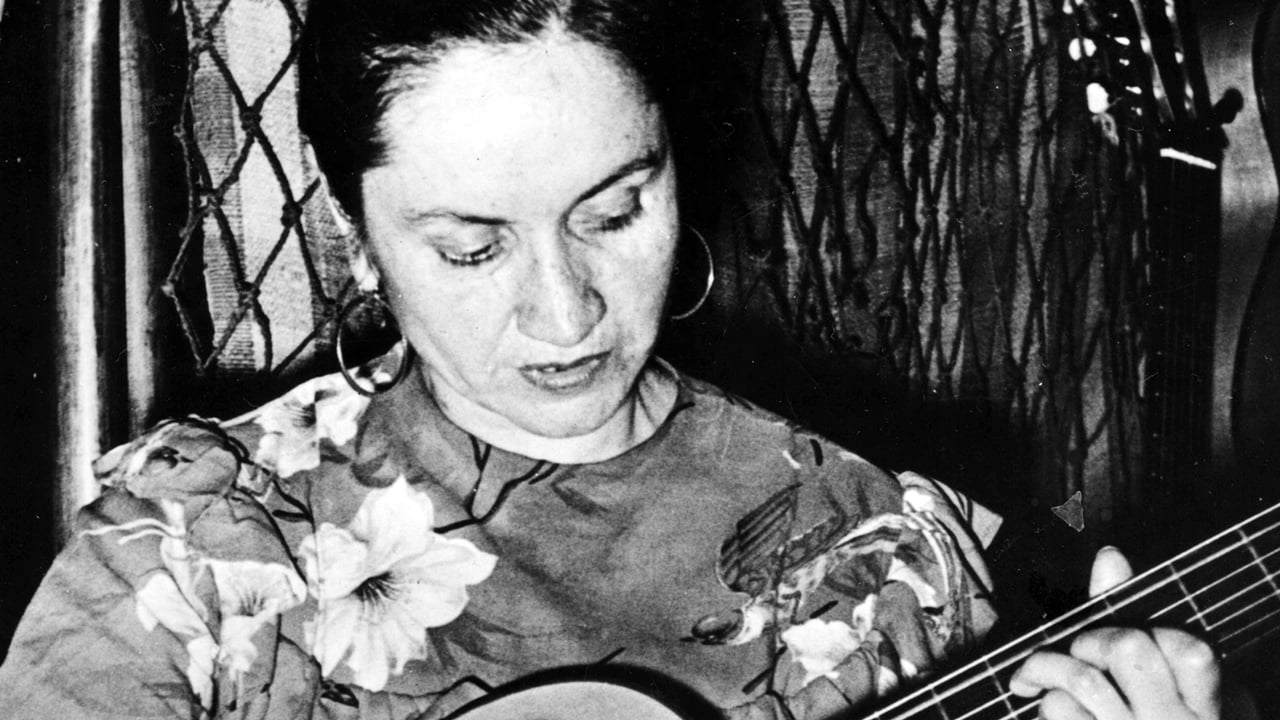
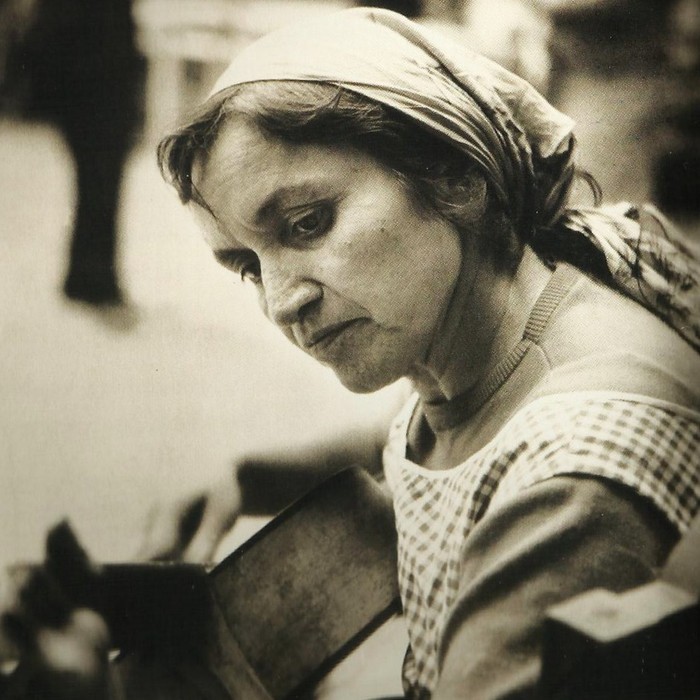
Nueva canción, Chilean folk · San Carlos, Chile · Since 1917
Violeta Parra
0 people tracking · No upcoming concerts
Upcoming concerts
No concerts announced. Track Violeta Parra and they'll show up in My concerts as soon as they're announced.
Find Violeta Parra tickets
Prices and fees differ between sellers. Each opens in a new tab.
- Ticketmaster ↗Official tickets
- Vivid Seats ↗Resale
- StubHub ↗Resale
- SeatGeek ↗Resale
- TickPick ↗No buyer fees
- TicketNetwork ↗Resale
- Ticket Liquidator ↗Sold-out shows
- Gametime ↗Last minute
zaboomba may earn a commission when you buy through these links. It doesn't change the price you pay.
About
Violeta del Carmen Parra Sandoval (4 October 1917 – 5 February 1967) was a Chilean composer, songwriter, folklorist, ethnomusicologist and visual artist. She pioneered the Nueva Canción Chilena (Chilean' New Song), a renewal and a reinvention of Chilean folk music which would extend its sphere of influence outside Chile. In 2011 Andrés Wood directed a biopic about her, titled Violeta Went to Heaven.
Parra was born in San Fabián de Alico, near San Carlos, Ñuble Province, a small town in southern Chile on 4 October 1917, as Violeta del Carmen Parra Sandoval. Violeta Parra was a member of the prolific Parra family. Among her brothers were the notable modern poet, better known as the "anti-poet", Nicanor Parra, and fellow folklorist Roberto Parra. Her son, Ángel Parra, and her daughter, Isabel Parra, are also important figures in the development of the Nueva Canción Chilena. Their children have also mostly maintained the family's artistic traditions.
Her father was a music teacher and her mother worked on a farm, but sang and played the guitar in her spare time. Two years after Violeta's birth, the family moved to Santiago, then, two years later, to Lautaro and, finally, in 1927, to Chillán. It was in Chillan that Violetta started singing and playing the guitar, together with her siblings Hilda, Eduardo and Roberto; and soon began composing traditional Chilean music. After Parra's father died in 1929, the life circumstances of her family greatly deteriorated. Violeta and her siblings had to work to help feed the family. In 1932, at the insistence of her brother Nicanor, Parra moved to Santiago to attend the Normal School, staying with relatives. Later, she moved back with her mother and siblings to Edison street, in the Quinta Normal district.
The Parras performed in nightclubs, such as El Tordo Azul and El Popular, in the Mapocho district, interpreting boleros, rancheras, Mexican corridos and other styles. In 1934, she met Luis Cereceda, a railway driver, whom she married four years later, and with whom she had two children. Her husband was a militant communist, and, at his side, Parra became involved in the progressive movement and the Communist Party of Chile, taking part in the presidential campaign of Gabriel González Videla in 1944. Parra began singing songs of Spanish origin, from the repertoire of the famous Argentinian singers Lolita Torres and Imperio Argentina. She sang in restaurants and, also, in theatres, calling herself Violeta de Mayo. In 1945, she appeared with her children Isabel and Angel in a Spanish show in the Casanova confectionery. In 1948, after ten years of marriage, Parra and Luis Cereceda separated. Parra and her sister Hilda began singing together as "The Parra Sisters", and they recorded some of their work on RCA VICTOR. Also in 1946, Violeta met and married Luis Arce. Their daughter Carmen Luisa was born in 1949. Parra continued performing: she appeared in circuses and toured, with Hilda and with her children, throughout Argentina.
In 1952, Parra's second daughter, Rosita Clara, was born. In that same year, driven by her brother Nicanor, Violeta began to collect and collate authentic Chilean folk music from all over the Chile. She abandoned her old repertoire for folk songs, and began composing her own songs based on traditional folk forms. She gave recitals at universities, presented by Enrique Bello Cruz, a founder of cultural magazines. Soon, Parra was invited to the "Summer School" at the University of Concepción. She was also invited to teach courses in folklore at the University of Iquique. In Valparaiso, she was presented at the Chilean-French Institute.
Parra's two singles for EMI-Odeon label: "Que Pena Siente el Alma" and "Verso por el Fin del Mundo", and "Casamiento de Negros" and"Verso por Padecimiento" brought her a good measure of popularity. Don Isaiah Angulo, a tenant farmer, taught her to play the guitarrón, a traditional Chilean guitar-like instrument with 25 strings.
Biography: TheAudioDB
Albums
Canta sus últimas composiciones (Con orquesta de cuerda dirigida por Nino García)
2023
Guitar Music of Chile
2008
Violeta Parra: Paroles et musiques chantée par Ángel Parra et 4 voix chiliennes
1997
Décimas
1976
Canciones Ineditas
1975
Las últimas composiciones de Violeta Parra
1966
Recordando a Chile: Una chilena en París
1965
El folklore de Chile según Violeta Parra
1962
El folklore de Chile, vol. VIII: Toda Violeta Parra
1961
El folklore de Chile, vol. III: La cueca presentada por Violeta Parra
1959
El folklore de Chile, vol. IV: La tonada presentada por Violeta Parra
1959
El folklore de Chile, vol. II: Violeta Parra, acompañándose en guitarra
1958
El folklore de Chile, vol. I: Violeta Parra, canto y guitarra
1957
Cantos de Chile
1956
Discography: MusicBrainz. Cover art: iTunes, Deezer & Cover Art Archive.