Gathering bio, albums and tour dates…

Upcoming concerts
No concerts announced. Track Ronnie James Dio and they'll show up in My concerts as soon as they're announced.
Find Ronnie James Dio tickets
Prices and fees differ between sellers. Each opens in a new tab.
- Ticketmaster ↗Official tickets
- Vivid Seats ↗Resale
- StubHub ↗Resale
- SeatGeek ↗Resale
- TickPick ↗No buyer fees
- TicketNetwork ↗Resale
- Ticket Liquidator ↗Sold-out shows
- Gametime ↗Last minute
zaboomba may earn a commission when you buy through these links. It doesn't change the price you pay.
About
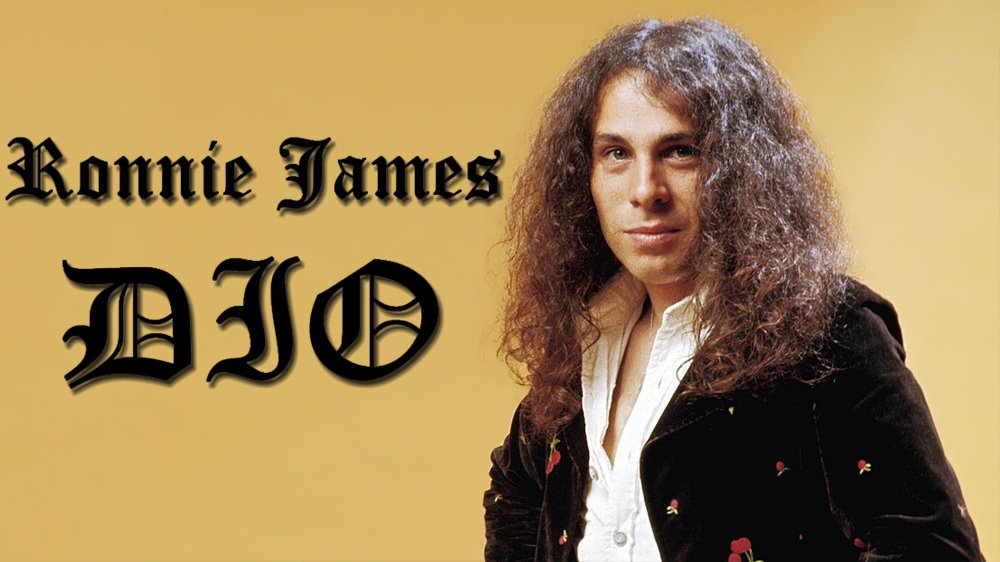
Ronnie James Dio (born Ronald James Padavona, July 10, 1942 - May 16, 2010) was an Italian American heavy metal vocalist and songwriter. He fronted numerous groups including Elf, Rainbow, Black Sabbath, Heaven & Hell, and his own band, Dio. He is credited with popularizing the "metal horns" hand gesture in metal culture and is known for his medieval themed lyrics. Dio possessed a powerful versatile vocal range capable of singing both hard rock and lighter ballads and according to Rainbow/Deep Purple guitarist Ritchie Blackmore upon hearing him sing, "I felt shivers down my spine." Dio sold over 47 million albums throughout his career.
Early years, education and musical training: Ronnie James Dio was born in Portsmouth, New Hampshire, to Italian American parents who had moved to Portsmouth from Cortland, New York, where they had grown up. The family resided in Portsmouth for only a short time before Dio's parents returned to Cortland. Dio listened to a great deal of opera while growing up, and was influenced vocally by American tenor Mario Lanza. His first and only formal musical training began at age 5 learning to play the trumpet. During high school, Dio played in the school band and was one of the youngest members selected to play in the school's official Dance Band. It was also during high school that Dio formed his first rock-n-roll group, the Vegas Kings (the name would soon change to Ronnie and the Rumblers, and then Ronnie and the Red Caps). Though Dio began his rock-n-roll career on trumpet, he quickly added bass guitar to his skillset once he assumed singing duties for the group. Dio graduated from Cortland High School in 1960. Though he claimed in a later interview to have been offered a scholarship to the prestigious Juilliard School of Music, he did not pursue it due to his continuing interest in rock-n-roll music. Instead, after graduation, he attended the University at Buffalo, majoring in Pharmacology. He only attended from 1960 to 1961, and played trumpet in the university's concert band, and did not graduate. Despite being known for his powerful singing voice, Dio claimed never to have taken any vocal training. Rather, he attributed his singing ability to the use of correct breathing techniques learned while playing trumpet.
Career:
Early career: Dio's musical career began in 1957 when several Cortland, New York musicians formed the band, The Vegas Kings. The group's lineup consisted of Dio on bass guitar, Billy DeWolfe on lead vocals, Nick Pantas on guitar, Tom Rogers on drums, and Jack Musci on saxophone. In 1958, the band again changed their name from Ronnie & The Rumblers to Ronnie and the Redcaps. Musci left the band in 1960, and a new guitarist, Dick Botoff, joined the lineup. The Redcaps released two singles: The first single was "Conquest"/"Lover" with the A-side being an instrumental reminiscent of The Ventures and the B-side featuring DeWolfe on lead vocals. The second single was "An Angel Is Missing"/"What'd I Say" which featured Dio on lead vocals for both tracks. Explanations vary for how Padavona adopted the stage name "Dio". One story is that Dio was a reference to mafia member Johnny Dio. Another has it that Padavona's grandmother said he had a gift from God and should be called "Dio". Whatever the inspiration, Padavona first used it on a recording in 1960, when he added it to the band's second release on Seneca. Soon after that the band modified their name to Ronnie Dio and the Prophets. The Prophets lineup lasted for several years, touring throughout the New York region and playing college fraternity parties. They produced one single for Atlantic and one album. Some of the singles (such as "Mr. Misery", released on Swan) were labeled as being by Ronnie Dio as a solo artist even if the rest of the Prophets contributed to the recording. The group released several singles during the following years, until early 1967. Dio continued to use his birth name on any songwriting credits on those releases. In late 1967 Ronnie Dio and the Prophets transformed into a new band called The Electric Elves and added a keyboard player. Following recovery from a deadly car accident in February 1968 (which killed guitarist Nick Pantas and put Dio and other band members in the hospital briefly), the group shortened its name to The Elves and used that name until mid 1972 when it released its first proper album under the name Elf. Over the next few years, the group went on to become a regular opening act for Deep Purple. Elf recorded three albums until the members' involvement recording the first Rainbow album in early 1975 resulted in Elf disbanding.
Rainbow:
Dio's vocals caught the ear of Deep Purple guitarist Ritchie Blackmore in the mid-1970s, who was planning on leaving then due to creative differences over the band's new direction. Blackmore invited Dio along with Gary Driscoll to record two songs in Tampa, Florida on December 12, 1974. Blackmore stated in 1983 that "I left Deep Purple because I'd met up with Ronnie Dio, and he was so easy to work with. He was originally just going to do one track of a solo LP, but we ended up doing the whole LP in three weeks, which I was very excited about." Being satisfied with the results, Blackmore decided to recruit more of Elf's musicians and form his own band, primarily known as Ritchie Blackmore's Rainbow. They released the self-entitled debut album Ritchie Blackmore's Rainbow in early 1975. After that, Dio recorded two studio albums (Rising and Long Live Rock 'n' Roll) and one live album (On Stage) with Blackmore. During his tenure with Rainbow, Dio and Blackmore were the only constant members. Dio is credited on those albums for all lyrical authorship as well as collaboration with Blackmore on musical arrangement. Dio and Blackmore split with Blackmore taking the band in a more commercial direction, with Graham Bonnet on vocals and the album "Down to Earth".
Biography: TheAudioDB
Albums
No albums found for this artist.