Gathering bio, albums and tour dates…
Upcoming concerts
No concerts announced. Track Luke the Drifter and they'll show up in My concerts as soon as they're announced.
Find Luke the Drifter tickets
Prices and fees differ between sellers. Each opens in a new tab.
- Ticketmaster ↗Official tickets
- Vivid Seats ↗Resale
- StubHub ↗Resale
- SeatGeek ↗Resale
- TickPick ↗No buyer fees
- TicketNetwork ↗Resale
- Ticket Liquidator ↗Sold-out shows
- Gametime ↗Last minute
zaboomba may earn a commission when you buy through these links. It doesn't change the price you pay.
About
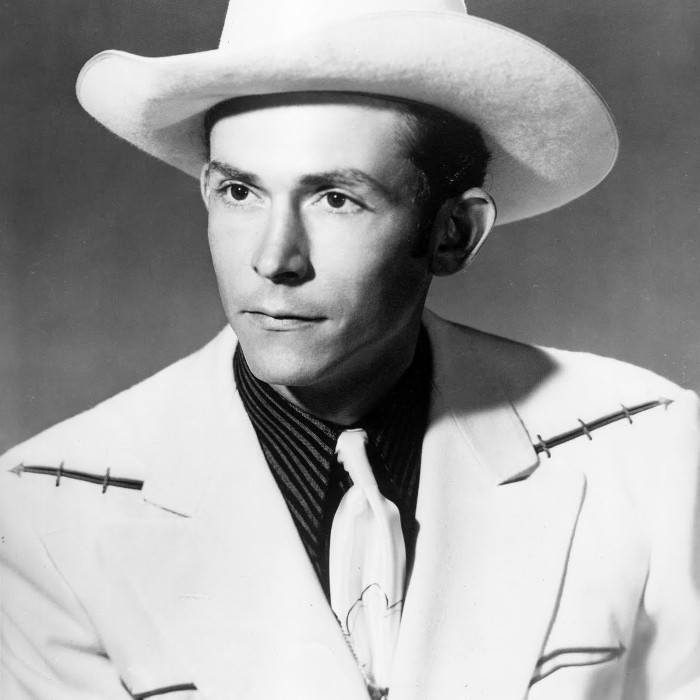
Hiram King "Hank" Williams, Sr. (/hæŋk wɪljəmz /; September 17, 1923 - January 1, 1953) was an American singer-songwriter and musician. Regarded as one of the most significant and influential singers and songwriters of the 20th Century, Williams recorded 35 singles (five released posthumously) that would place in the Top 10 of the Billboard Country & Western Best Sellers chart, including 11 that ranked number one. Born in Mount Olive, Butler County, Alabama, Williams moved to Georgiana, where he met Rufus Payne, a black street performer who gave him guitar lessons in exchange for meals or money. Payne had a major influence on Williams' later musical style, along with Roy Acuff and Ernest Tubb. During this time, Williams informally changed his name to Hank, believing it to be a better name for country music. He moved to Montgomery and his music career began there in 1937 when WSFA radio station producers hired him to perform and host a 15-minute program. He formed as backup the Drifting Cowboys band, which was managed by his mother, and dropped out of school to devote his time to his career. When several of his band members were conscripted into military service during World War II, Williams had trouble with their replacements and was dismissed by WSFA due to his alcoholism. Williams eventually married Audrey Sheppard, who managed the singer for nearly a decade. After recording "Never Again" and "Honky Tonkin'" with Sterling Records, he signed a contract with MGM Records. In 1948 he released "Move It on Over", which became a hit, and also joined the Louisiana Hayride radio program. One year later, he released a cover of "Lovesick Blues", which carried him into the mainstream of music. After an initial rejection, Williams joined the Grand Ole Opry. He was unable to read or notate music to any significant degree. Among the hits he wrote were "Your Cheatin' Heart", "Hey, Good Lookin'", and "I'm So Lonesome I Could Cry". Several years of back pain, alcoholism and prescription drug abuse severely deteriorated Williams' health; he divorced Audrey and was dismissed by the Grand Ole Opry, which cited unreliability and frequent drunkenness. Williams died in the early morning hours of New Year's Day in 1953 at the age of 29 from heart failure exacerbated by pills and alcohol. Despite his short life, Williams has had a major influence on twentieth-century popular music, and especially country music. The songs he wrote and recorded have been covered by numerous artists, and have been hits in various genres. He has been inducted into multiple music halls of fame, such as the Country Music Hall of Fame (1961), the Songwriters Hall of Fame (1970), and the Rock and Roll Hall of Fame (1987).
Life and career:
Early life:
Williams' parents, Elonzo Huble "Lon" Williams and Jessie Lillybelle "Lillie" Skipper married on November 12, 1916. Hank Williams was of English-American ancestry. Elonzo Williams worked as an engineer for the railroads of the W.T. Smith lumber company. He was drafted during World War I, serving from July 1918 until June 1919. He was severely injured after falling from a truck, breaking his collarbone and suffering a severe blow to the head. After his return, the family's first child, Irene, was born on August 8, 1922. Another son of theirs died shortly after birth. Their third child, Hiram, was born on September 17, 1923, in Mount Olive. Since Elonzo Williams was a Mason, and his wife was a member of Order of the Eastern Star the child was named after Hiram I of Tyre (one of the three founders of the Masons, according to Masonic legend), but his name was misspelled as "Hiriam" on his birth certificate. As a child, he was nicknamed "Harm" by his family and "Herky" or "Poots" by his friends. He was born with spina bifida occulta, a disorder of the spinal column, which gave him lifelong pain - a factor in his later abuse of alcohol and drugs. Williams' father was frequently relocated by the lumber company railway for which he worked, and the family lived in many southern Alabama towns. In 1930, when Williams was seven years old, his father began suffering from facial paralysis. At a Veterans Affairs (VA) clinic in Pensacola, Florida, doctors determined that the cause was a brain aneurysm, and Elonzo was sent to the VA Medical Center in Alexandria, Louisiana. He remained hospitalized for eight years, rendering him mostly absent throughout Hiram's childhood.From that time on, Lillie Williams assumed responsibility for the family. In the fall of 1934 the Williams family moved to Greenville, Alabama, where Lillie opened a boarding house next to the Butler County courthouse. In 1935 the Williams family settled in Garland, Alabama, where Lillie Williams opened a new boarding house. After a while they moved with his cousin Opal McNeil to Georgiana, Alabama where Lillie managed to find several side jobs to support her children, despite the bleak economic climate of the Great Depression. She worked in a cannery and served as a night-shift nurse in the local hospital. Their first house burned and the family lost its possessions. They moved to a new house on the other side of town on Rose Street, which Williams' mother soon turned into a boarding house. The house had a small garden, on which they grew diverse crops that Williams and his sister Irene sold around Georgiana. At a chance meeting in Georgiana, Hank Williams met U.S. Representative J. Lister Hill while he was campaigning across Alabama. Williams told Hill that his mother was interested to talk with him about his problems and her need to collect Elonzo Williams' disability pension. With Hill's help, the family began collecting the money. Despite his medical condition, the family managed fairly well financially throughout the Great Depression. There are several versions of how Williams got his first guitar. His mother stated that she bought it with money from selling peanuts, but many other prominent residents of the town claimed to have been the one who purchased the guitar for him. While living in Georgiana, Williams met Rufus "Tee-Tot" Payne, a street performer. Payne gave Williams guitar lessons in exchange for meals prepared by Lillie Williams or money. Payne's base musical style was blues. He taught Williams chords, chord progressions, bass turns, and the musical style of accompaniment that he would use in most of his future songwriting. Later on, Williams recorded one of the songs that Payne taught him, "My Bucket's Got a Hole in It". Williams musical style contained influences from Payne along with several other country influences, among them "the Singing Brakeman" Jimmie Rodgers, Moon Mullican, and Roy Acuff. In 1937 Williams got into a fight with his physical education coach about exercises the coach wanted him to do. His mother subsequently demanded that the school board terminate the coach; when they refused, the family moved to Montgomery, Alabama. Payne and Williams lost touch, though eventually, Payne also moved to Montgomery, where he died in poverty in 1939. Williams later credited him as his only teacher.
Early career:
In July 1937, the Williams and McNeil families opened a boarding house on South Perry Street in downtown Montgomery. It was at this time that Williams decided to change his name informally from Hiram to Hank, a name he said was better suited to his desired career in country music. During the same year he participated in a talent show at the Empire Theater. He won the first prize of $15, singing his first original song "WPA Blues". Williams wrote the lyrics and used the tune of Riley Puckett's "Dissatisfied". He never learned to read music and, for the rest of his career, based his compositions in storytelling. After school and on weekends Williams sang and played his Silvertone guitar on the sidewalk in front of the WSFA radio studios. His recent win at the Empire Theater and the street performances caught the attention of WSFA producers who occasionally invited him to perform on air. So many listeners contacted the radio station asking for more of "the singing kid" that the producers hired him to host his own 15-minute show twice a week for a weekly salary of US$15 (equivalent to US$246.10 in 2015). In August 1938, Elonzo Williams was temporarily released from the hospital. He showed up unannounced at the family's home in Montgomery. Lillie was unwilling to let him reclaim his position at the head of the household, so he stayed only long enough to celebrate Williams' birthday in September before he returned to the medical center in Louisiana. Williams' successful radio show fueled his entry into a music career. His salary was enough for him to start his own band, which he dubbed the Drifting Cowboys. The original members were guitarist Braxton Schuffert, fiddler Freddie Beach, and comedian Smith "Hezzy" Adair. James E. (Jimmy) Porter was the youngest, being only 13 when he started playing steel guitar for Williams. Arthur Whiting was also a guitarist for The Drifting Cowboys. The band traveled throughout central and southern Alabama performing in clubs and at private parties. James Ellis Garner later played fiddle for him. Lillie Williams became the Drifting Cowboys' manager. Williams dropped out of school in October 1939 so that the Drifting Cowboys could work full-time. Lillie Williams began booking show dates, negotiating prices and driving them to some of their shows. Now free to travel without Williams' schooling taking precedence, the band could tour as far away as western Georgia and the Florida Panhandle. The band started to play in theaters before the start of the movies and later in honky-tonks. Williams' alcohol problem started during the tours, on occasion spending an important part of the show revenues. Meanwhile, between tour schedules, Williams returned to Montgomery to host his radio show.
Biography: TheAudioDB
Albums
No albums found for this artist.